










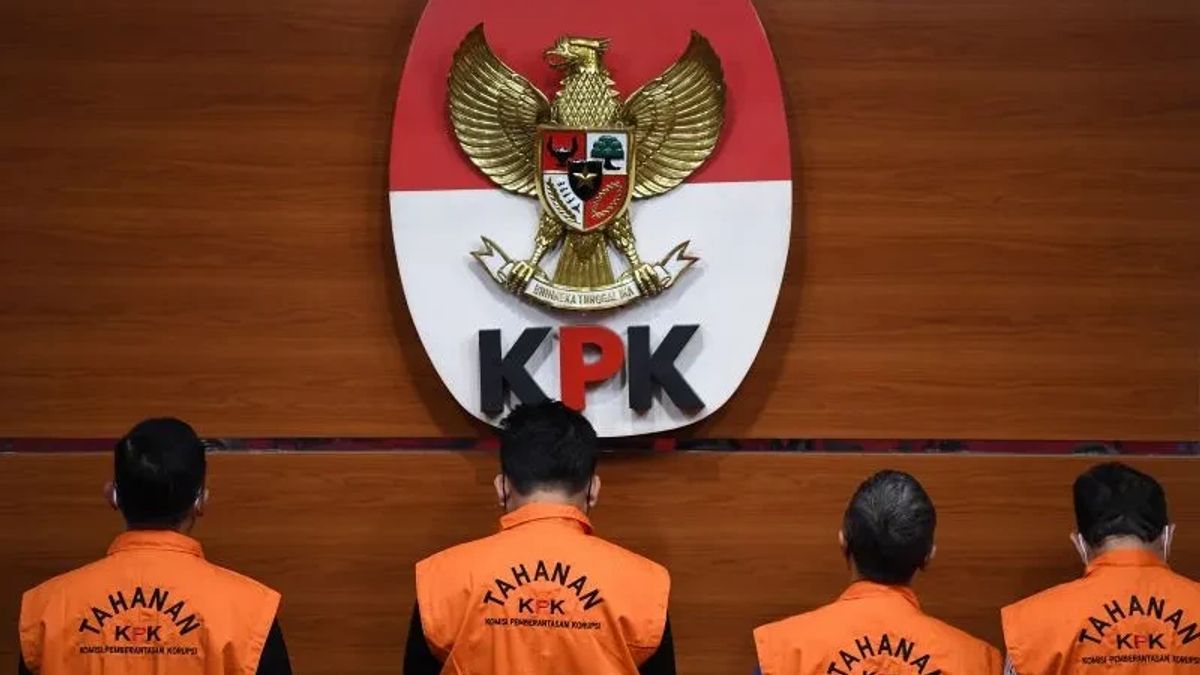
KPK Commission: Assessing the Role and Effectiveness of Indonesia’s Anti-Corruption Agency
Jakarta, turkeconom.com – The KPK Commission, formally known as Indonesia’s Corruption Eradication Commission, is one of the country’s most important public institutions in the fight against corruption. Established to investigate, prevent, and prosecute corruption cases, the KPK has long occupied a central place in Indonesia’s legal and political landscape. Its significance goes beyond law enforcement alone. It also reflects broader questions about institutional independence, public trust, state capacity, and democratic accountability.
Assessing the KPK Commission means looking at both its formal role and its practical effectiveness. On paper, the institution was designed to address serious corruption that traditional enforcement bodies often struggled to handle. In practice, its record has included high profile prosecutions, major public support, political resistance, and recurring debates over whether its powers have been strengthened or constrained over time. Here’s how that role can be understood more clearly.
Core Role of the KPK Commission

The KPK Commission was created as a specialized anti corruption body with a mandate that combines enforcement and prevention.
Main institutional functions
Its core responsibilities generally include:
- Investigating corruption cases
- Prosecuting corruption offenses
- Coordinating with other law enforcement agencies
- Supervising anti corruption efforts across institutions
- Conducting prevention and public education initiatives
- Monitoring governance practices that may create corruption risk
These functions matter because corruption is not only a legal issue but also an institutional and political one. A body like the KPK was intended to address corruption more independently and more effectively than ordinary mechanisms alone.
Why a specialized agency matters
A specialized anti corruption institution can be important when:
- Existing police or prosecutorial systems face credibility problems
- Corruption networks involve powerful officials
- Complex financial and bureaucratic schemes require focused expertise
- Public trust depends on visible institutional action
In this sense, the KPK Commission was designed as both an enforcement tool and a symbol of reform.
Effectiveness and Institutional Performance
Looking at effectiveness requires more than asking whether the KPK exists. The key question is whether it has been able to produce meaningful anti corruption outcomes.
Areas where the KPK has been seen as effective
The KPK Commission has often been regarded as effective in several ways:
- Pursuing high profile corruption cases involving senior officials
- Building a strong public reputation for seriousness
- Creating deterrent effects through visible enforcement
- Raising anti corruption awareness nationally
- Encouraging governance reform in public institutions
One reason the KPK gained such strong public recognition is that it did not operate as a quiet administrative office. It became known for taking on politically sensitive cases that signaled no office should be fully insulated from scrutiny.
Limits on effectiveness
At the same time, effectiveness can be reduced by several factors:
- Political interference or resistance
- Legal reforms that weaken operational independence
- Institutional overlap with police and prosecutors
- Resource constraints
- Internal governance challenges
- Broader systemic corruption beyond the reach of individual prosecutions
This is the central tension. A strong anti corruption agency can expose wrongdoing, but durable success also depends on courts, legislatures, executive institutions, and public sector reform. One institution cannot clean an entire system by itself, however determined it may be.
Key Dimensions for Assessing the KPK Commission
A useful way to assess the KPK Commission is to break the issue into several dimensions.
Assessment table
Below is a concise summary of the major dimensions involved.
| Dimension | What to Assess | Why It Matters |
|---|---|---|
| Independence | Freedom from political pressure | Determines credibility and enforcement reach |
| Enforcement capacity | Ability to investigate and prosecute major cases | Reflects practical anti corruption strength |
| Prevention role | Success in reducing future corruption risks | Moves the agency beyond reactive prosecution |
| Public trust | Citizen confidence in fairness and integrity | Supports legitimacy and cooperation |
| Institutional environment | Relationship with courts, police, and government | Shapes whether outcomes are sustained |
Taken together, these dimensions show that effectiveness is not a single number. It is a combination of legal authority, institutional design, political environment, and real world results.
Broader Significance and Takeaways
The KPK Commission matters because corruption is not a narrow technical issue. It affects governance quality, economic confidence, public services, rule of law, and democratic legitimacy. A credible anti corruption agency can therefore play a national role far larger than its organizational size might suggest.
Key takeaways
- The KPK Commission was created to provide focused anti corruption enforcement and prevention.
- Its importance comes from both its legal powers and its symbolic role in democratic reform.
- Its effectiveness has historically depended on independence, enforcement capacity, and public trust.
- Its limitations often reflect broader political and institutional conditions, not just internal performance.
- Assessing the KPK requires looking at both prosecutions and long term governance impact.
The central lesson is straightforward. The KPK Commission is most effective when it operates independently within a wider system that supports accountability, legal integrity, and institutional reform. Without that broader support, even a respected anti corruption body faces a steep uphill battle, and corruption is rarely known for fighting fair.
Explore our “”Politic“” category for more insightful content!
Don't forget to check out our previous article: Village Law: Implementing UU Desa for Rural Empowerment In Indonesia
