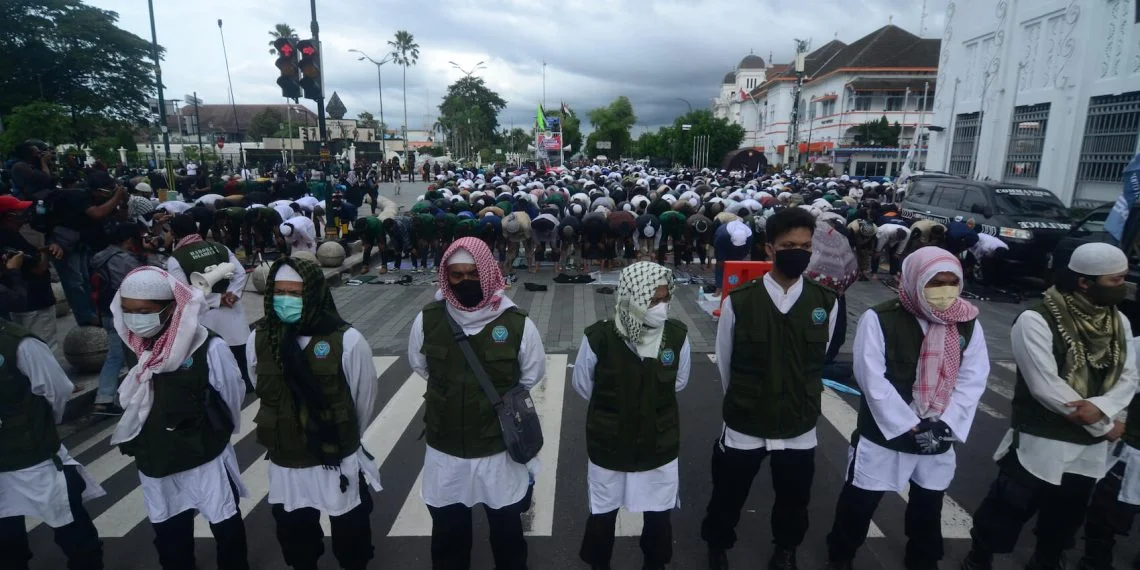
The Islamic Defenders Front (Front Pembela Islam, or FPI) is a significant and often controversial organization in Indonesian politics. Established in 1998, the FPI has positioned itself as a vocal advocate for Islamic values and has played a crucial role in shaping the political landscape of Indonesia. Known for its strong stance on moral issues and its activism in promoting Islamic teachings, the FPI has garnered both support and criticism. In this article, we will explore the rise of the Islamic Defenders Front, its influence on Indonesian politics, and the implications of its actions on the nation’s socio-political fabric.
Origins and Development of the Islamic Defenders Front

Formation
The Islamic Defenders Front was founded in response to the political changes in Indonesia following the fall of President Suharto in 1998. The organization aimed to defend Islamic values and address perceived moral decay in society. Initially, it focused on issues such as the enforcement of Islamic law and the promotion of Islamic teachings.
Key Figures
The FPI was led by Rizieq Shihab, a charismatic cleric who became the face of the organization. His leadership style and fiery speeches resonated with many Indonesians, particularly those who felt marginalized in the post-Suharto era. Under his guidance, the FPI expanded its influence, organizing rallies and protests to voice its concerns over various social and political issues.
Influence on Indonesian Politics
Advocacy and Activism
The FPI has been known for its activism, often taking to the streets to protest against issues such as pornography, alcohol consumption, and what it perceives as blasphemy against Islam. The organization’s ability to mobilize large crowds has made it a significant force in Indonesian politics, often swaying public opinion on key issues.
Political Alliances
The Islamic Defenders Front has forged alliances with various political parties, particularly those with Islamic affiliations. Its support has been crucial for candidates seeking to appeal to the conservative Muslim electorate. The FPI’s endorsement can significantly impact election outcomes, making it a key player in the political arena.
Role in the Jakarta Gubernatorial Election
One of the most notable instances of the FPI’s political influence was during the 2017 Jakarta gubernatorial election. The organization played a pivotal role in campaigning against the incumbent governor, Basuki Tjahaja Purnama (Ahok), who faced accusations of blasphemy. The FPI’s mobilization efforts contributed to Ahok’s defeat, showcasing the organization’s power in shaping electoral outcomes.
Controversies and Criticisms
Extremist Allegations
The Islamic Defenders Front has faced numerous allegations of extremism and intolerance. Critics argue that the organization promotes a hardline interpretation of Islam and engages in violent actions against those who oppose its views. Incidents of intimidation and violence have raised concerns about the FPI’s methods and its impact on Indonesia’s pluralistic society.
Government Crackdown
In recent years, the Indonesian government has taken steps to curb the influence of the FPI. In December 2020, the organization was officially disbanded by the government, citing its activities as a threat to national security and public order. This move sparked debates about freedom of expression and the balance between maintaining order and allowing political dissent.
The Future of the Islamic Defenders Front
Resilience and Adaptation
Despite the government’s crackdown, the FPI has shown resilience. The organization has attempted to adapt by rebranding itself and continuing its advocacy through social media and other platforms. Its ability to mobilize supporters remains a significant factor in its ongoing influence in Indonesian politics.
Broader Implications
The presence of the Islamic Defenders Front highlights the complexities of Indonesia’s political landscape, where religious identity plays a crucial role in shaping political affiliations and public discourse. The FPI’s activities reflect broader societal tensions regarding the role of Islam in governance and the challenges of maintaining Indonesia’s reputation as a moderate Muslim-majority country.
Conclusion
The Islamic Defenders Front is undeniably a key player in Indonesian politics, with its influence felt across various aspects of society. As the organization navigates its future in the face of government opposition and societal challenges, its actions will continue to shape the political discourse in Indonesia. Understanding the FPI’s role is essential for anyone looking to grasp the intricacies of Indonesian politics and the ongoing interplay between religion and governance. Whether viewed as a defender of Islamic values or a controversial force, the Islamic Defenders Front remains a significant entity that cannot be ignored.