










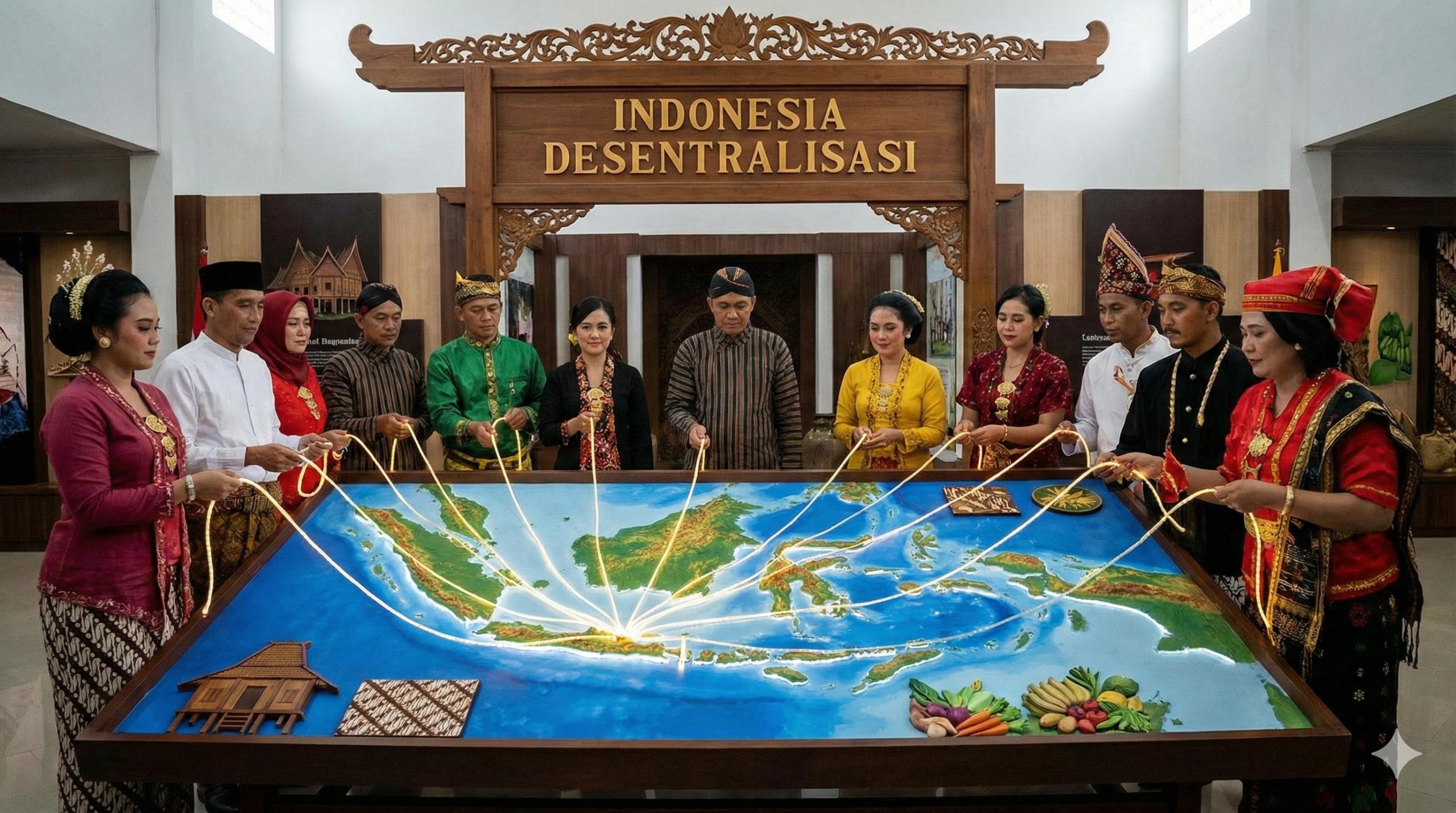
Desentralisasi: Empowering Regions in Indonesian Governance — My Honest Take & Lessons
JAKARTA, turkeconom.com – Desentralisasi: Empowering Regions in Indonesian Governance is probably one of the topics I geek out to most, especially with all the chatter in politic lately. I still remember when the term was, like, thrown around everywhere post-1998. I was a high schooler then, totally clueless about what it really meant for our hometowns (trust me, a lot of us thought it sounded like just another government buzzword).
Since the fall of the New Order in 1998, desentralisasi (decentralization) has been Indonesia’s bold experiment in shifting power from Jakarta to the regions. By granting provinces, regencies, and cities greater autonomy over budgeting, legislation, and public services, desentralisasi aims to accelerate development, increase government accountability, and tailor policies to local needs. In this article, I’ll explain how Indonesia’s decentralization works, share real-world stories from the field, reflect on key lessons learned, and offer my honest take on what it means for the future of our nation.
1. What Is Desentralisasi?
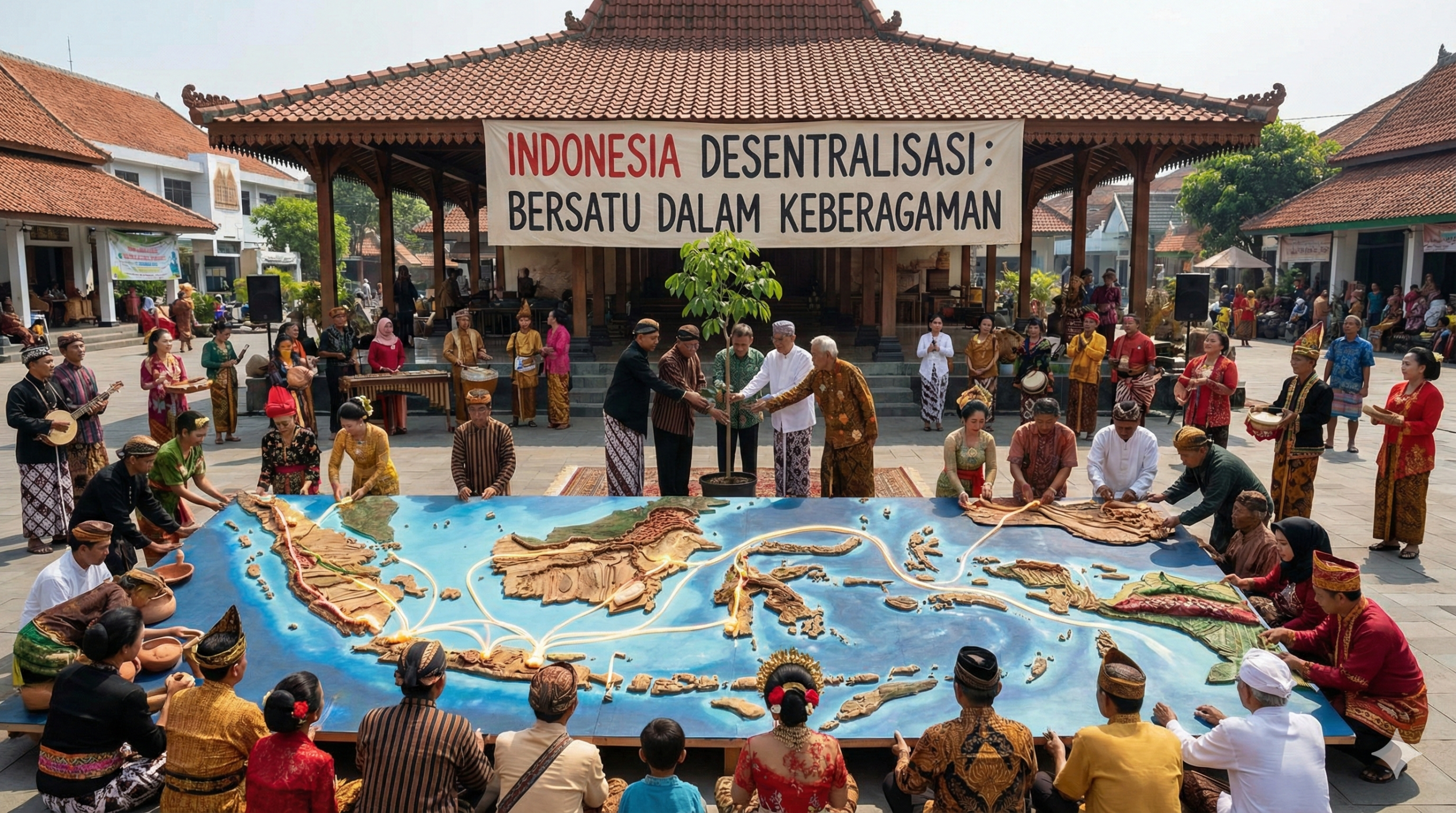
Desentralisasi is the legal and institutional process that devolves authority from the central government to subnational governments. Its main pillars:
- Otonomi Daerah (Regional Autonomy): Regions legislate and implement policies in areas like education, health, infrastructure, and small-scale licensing.
- Dana Transfer (Fiscal Transfers): Central government distributes funds through the Dana Alokasi Umum (DAU), Dana Alokasi Khusus (DAK), and Dana Bagi Hasil (DBH) formulas.
- Penguatan Kapasitas (Capacity Building): Training, e-governance platforms, and technical assistance to ensure regional bodies can manage new responsibilities.
Legal framework:
- Undang-Undang No. 22/1999 & No. 25/1999 (replaced by UU 23/2014)
- UU 23/2014 on Regional Government
- UU 33/2004 on Financial Balance between Central and Regional Governments
2. Real Stories from the Regions
A. East Kalimantan’s Health Service Overhaul
After autonomy, the provincial government launched mobile clinics for remote communities. By reallocating DAK funds and partnering with local NGOs, they reduced maternal mortality by 20% over five years.
B. Banyuwangi’s Tourism Renaissance
Regency leaders used budgetary freedom to invest in coastal festivals and home-stay programs. The result: a 150% increase in tourism revenue and new jobs for artisans and fishermen.
C. Papua’s Education Challenge
With DAU funds, the provincial government built 300 primary schools. Yet teacher shortages persisted due to geographic remoteness—highlighting that fiscal transfers alone can’t fix human-resource gaps.
3. Key Lessons Learned
- Align Funds with Local Priorities
• Issue: Regions sometimes spend DAK on items misaligned with needs.
• Lesson: Conduct participatory budgeting—engage community forums (musrenbang) to set priorities. - Build Administrative Capacity
• Issue: Smaller districts lack skilled planners and procurement officers.
• Lesson: Invest in continuous training, e-learning modules, and peer-network exchanges. - Ensure Transparency & Accountability
• Issue: Corruption and misappropriation have surfaced in some local projects.
• Lesson: Implement open-data portals (e-PPID, SIPD) and social audits by civil-society organizations. - Foster Inter-Governmental Coordination
• Issue: Overlapping duties between province and regency cause delays.
• Lesson: Clarify roles via standard operating procedures and joint task-forces for cross-boundary issues (e.g., watershed management). - Leverage Technology
• Issue: Manual processes slow service delivery.
• Lesson: Deploy one-stop-service apps and geospatial planning tools to streamline licensing, land-use permits, and public works monitoring.
4. My Honest Take
Having worked with both Pemprov and Pemkab offices, I’ve seen desentralisasi’s promise and pitfalls. On one hand, local leaders can innovate—designing fishery grants in Sulawesi or agrotourism in West Java. On the other hand, some regions treat fiscal transfers as entitlements rather than instruments of public service, leading to budgetary waste. True decentralization demands not only devolution of funds but also a shift in mindset: from top-down command to citizen-centered governance.
5. Recommendations for Strengthening Desentralisasi
- Embed Civic Participation: Require public hearings at every stage of the regional budgeting process.
- Tie Transfer Funds to Performance: Introduce incentive grants for districts that meet health, education, and infrastructure KPIs.
- Enhance Data Integration: Connect national portals (SIPD, e-Planning) with local systems to enable real-time monitoring.
- Promote Regional Collaborations: Encourage clusters of neighboring districts to pool resources for large projects (e.g., flood control, toll roads).
- Develop Leadership Pipelines: Offer scholarships and fellowships for promising regional civil servants to pursue master’s degrees in public administration.
Conclusion
Desentralisasi represents one of Indonesia’s greatest governance shifts—a chance to make democracy more responsive and development more equitable. While successes in health, tourism, and infrastructure prove its potential, challenges in capacity, transparency, and coordination remind us that devolution is only half the battle. By coupling fiscal autonomy with accountability, citizen engagement, and professionalization, Indonesia can realize the full promise of decentralized governance and empower every region to write its own success story.
Sharpen Your Skills: Delve into Our Expertise on Politic
Check Out Our Latest Piece on Partai NasDem: A Reform-Oriented Force in Indonesian Politics!
