









Coup d’état: Historical Context of Power Grabs in Indonesia — My Surprising Deep Dive
JAKARTA, turkeconom.com – Coup d’état: Historical Context of Power Grabs in Indonesia is one of those spicy topics that always gets me thinking, you know? When I first started digging into Indonesia’s political history, I had no idea how much these power shifts still impact daily life! Stick around, I’ll share some first-hand stories, rookie mistakes, and wild discoveries you won’t find in your usual history book.
In a nation forged through colonial struggle and revolutionary fervor, coup d’état has repeatedly reshaped Indonesia’s political landscape. On my deep dive into Indonesia’s modern history, I uncovered patterns, players, and paradoxes that explain how—and why—power was seized at gunpoint or behind closed doors. This guide walks you through the major incidents, their drivers, and the lasting lessons for Indonesia’s democracy.
Defining Coup d’état
A coup d’état (French for “blow of state”) is a sudden, extra-constitutional seizure of governmental power, usually executed by the military or a faction within the state apparatus. Unlike revolutions driven by mass uprisings, coups often rely on small insider groups, swift action, and control of communications.
Key characteristics:
- Rapid execution (hours to days)
- Limited popular mobilization
- Reliance on military or security forces
- Aim to replace top leadership without altering state institutions fundamentally
Timeline of Major Coups and Power Grabs
| Year | Event | Actors | Outcome |
|---|---|---|---|
| 1957–58 | PRRI/Permesta Rebellions | Regional military commanders | Suppressed by central government; reinforced Jakarta’s authority |
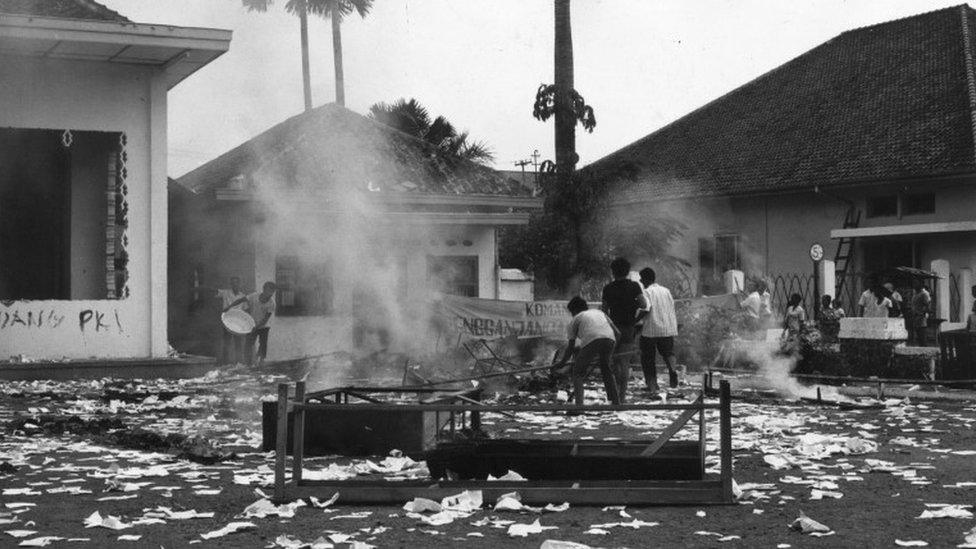
| 1965 | 30 September Movement (G30S/PKI) | Faction in the Army, PKI (alleged) | Suharto’s rise; mass anti-communist purge |
| 1966 | Supersemar Transfer of Power | President Sukarno → General Suharto | New Order regime institutionalized |
| 1998 | Fall of Suharto/People Power (Reformasi) | Students, military hardliners | End of New Order; transition to democracy |
Early Rebellions: PRRI & Permesta (1957–58)
Shortly after independence, dissatisfaction with Jakarta’s centralization and corruption sparked regional coups:
- PRRI (Sumatra) and Permesta (Sulawesi) enlisted dissident military officers who felt marginalized.
- They declared alternate governments, citing fiscal neglect and political cronyism.
- Jakarta’s swift military response reasserted President Sukarno’s control but sowed seeds of distrust between regions and the center.
Surprising insight: despite being framed as rebellions, PRRI/Permesta leaders originally sought negotiation, not outright regime change—highlighting the gray zone between protest and coup.
The 1965 G30S Incident and the New Order Takeover
By far the most consequential coup d’état moment in Indonesian history:
- Prelude: Deepening rivalry between President Sukarno’s left-leaning Guided Democracy and the army’s nationalist factions.
- The Operation: In the early hours of September 30, 1965, a group identifying as the “30 September Movement” kidnapped and killed six top generals.
- Suharto’s Response: General Suharto mobilized forces, portrayed the incident as a communist coup attempt, and gradually sidelined Sukarno.
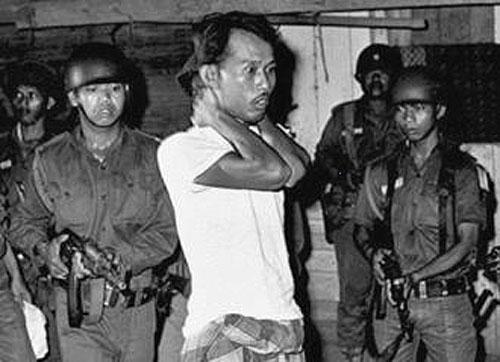
- Aftermath: The ensuing anti-PKI purge (500,000–1,000,000 killed) cleared the path for Suharto’s New Order, which ruled until 1998.
Lessons learned:
- Control of the narrative (radio, army communiqués) was as decisive as battlefield maneuvers.
- Ambiguity over who orchestrated G30S still fuels debate—underscoring how coup d’état myths and counter-myths persist.
Supersemar & Legitimizing the New Order (1966)
On March 11, 1966, President Sukarno signed the infamous Supersemar (Surat Perintah Sebelas Maret), ostensibly granting Suharto emergency powers.
- This transfer was never fully transparent—no original document survives.
- Suharto used Supersemar to ban the PKI, purge Sukarno loyalists, and consolidate executive authority.
Supersemar illustrates how a seemingly legal instrument can cloak a coup d’état under the veneer of constitutionalism.
Reformasi and the Fall of Suharto (1998)
The coup d’état paradigm shifted from military to mass movement:
- Economic crisis + student protests challenged Suharto’s 32-year rule.
- Key generals withdrew support; Suharto resigned on May 21, 1998.
- The People Power uprising showed that coups need not be violent if elite defections and popular mobilization align.
This “soft coup” underscores the evolving nature of power grabs in an era of information and civic engagement.
Patterns & Power Dynamics
Through Indonesia’s history of coups, clear patterns emerge:
- Military as Kingmaker: Control of the armed forces remains the ultimate guarantor of power.
- Narrative Control: Propaganda, radio broadcasts, and later social media define legitimacy.
- Elite Factionalism: Coups exploit splits among politicians, generals, and party cadres.
- External Influences: Cold War geopolitics (U.S. and Soviet/Chinese interests) shaped 1965 events.
- Legal Facades: Emergency decrees and backdated laws often follow bullets.
Contemporary Reflections
- Indonesia’s 2014 and 2019 elections were peaceful transfers, yet the shadow of past coups fuels anxiety over civil-military relations.
- Strengthening civilian oversight of the military and transparent intelligence services is crucial to prevent future coup d’état attempts.
- Civic education—highlighting the fragility of constitutional order—remains the best antidote to power grabs.
Final Takeaways
My deep dive into Indonesia’s coup d’état history revealed that seizing power is as much about controlling minds as it is about controlling barracks. As Indonesia continues to consolidate its democracy, understanding these power grabs—both bloody and bureaucratic—helps safeguard against repeating the past. In the end, every coup story is a lesson in the perennial tug-of-war between authority and accountability.
Sharpen Your Skills: Delve into Our Expertise on Politic
Check Out Our Latest Piece on Indonesian Legislation: Shaping Policy and Governance!
